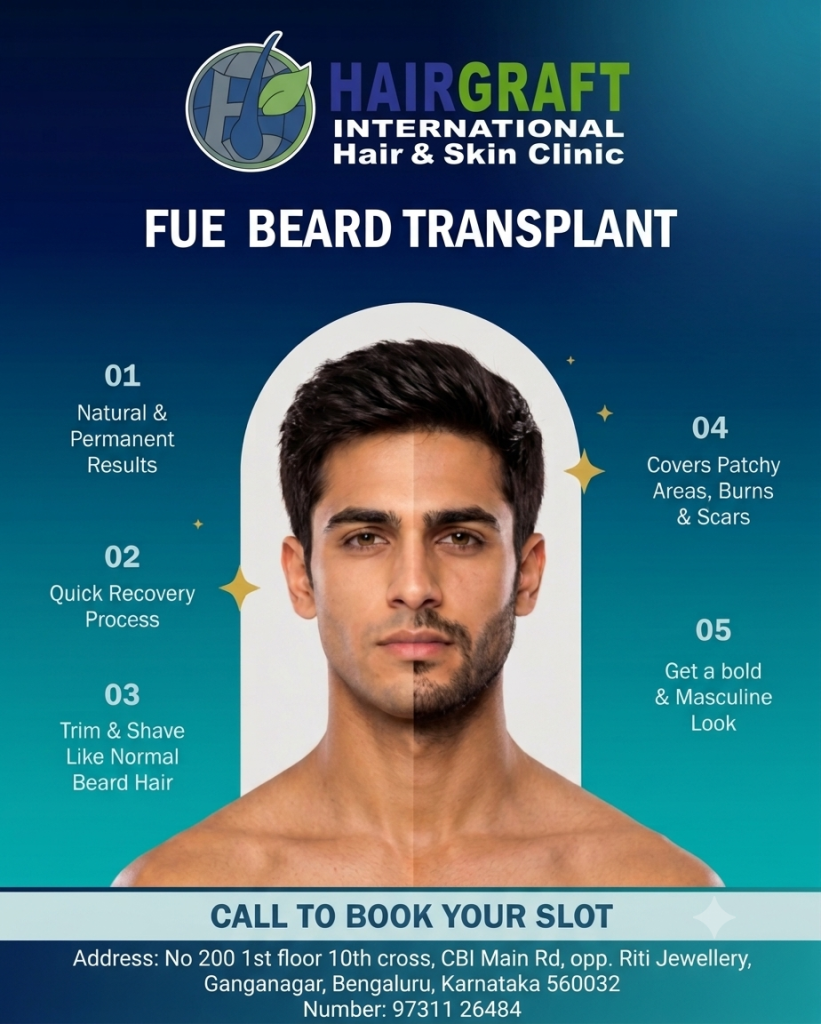
A fuller, well-defined beard can significantly influence the appearance of the lower face. However, genetics, hormonal factors, scarring, previous injuries, and naturally uneven follicle distribution can result in patchy or sparse beard growth. For men who want a more consistent beard pattern, beard transplant surgery can provide a long-term option for restoring hair in areas where natural growth is limited.
A beard transplant is a surgical hair restoration procedure in which individual hair follicles are carefully harvested from a suitable donor area and implanted into selected areas of the beard, moustache, chin, jawline, or sideburns. The goal is not simply to add more hair, but to create a beard pattern that looks natural and suits the patient’s facial structure.
At Hairgraft International, facial hair transplantation is offered as a specialized hair restoration service, with treatment planning based on the patient’s existing beard pattern, donor area, facial proportions, and desired appearance.
What Is a Beard Transplant?
A beard transplant uses healthy hair follicles from a donor area and relocates them to areas of the face where beard growth is sparse or absent.
Unlike temporary cosmetic solutions such as beard pencils, fibers, or makeup, transplanted follicles are intended to grow as living hair. The procedure can be used to address several concerns, including:
- Patchy or uneven beard growth
- Sparse moustache density
- Weak or incomplete goatee areas
- Limited chin or jawline coverage
- Uneven sideburns
- Beard gaps caused by scars or previous injuries
- Naturally low facial-hair density
The exact number of grafts required varies considerably from person to person. Factors such as the size of the area being treated, existing facial hair, donor availability, hair characteristics, desired density, and the patient’s expectations all influence the treatment plan.
How Is Beard Transplant Surgery Performed?
1. Consultation and Beard Design
The procedure begins with a detailed consultation. The doctor evaluates the beard and moustache pattern, facial proportions, skin condition, existing hair density, and donor area.
One of the most important parts of beard transplantation is designing the recipient area. The proposed beard line and density need to complement the patient’s natural facial structure.
The surgeon also considers the direction in which facial hair naturally grows. This is particularly important because beard hair can grow at different angles across the cheeks, moustache, chin, and jawline.
A beard design that looks appropriate for the patient’s face today should also take into account future preferences, including the possibility of keeping the beard short or shaving it.
2. Donor Hair Selection
The next step is identifying an appropriate donor area.
In many cases, follicles are harvested from the scalp. Depending on the individual, other donor sources may sometimes be considered. The quality and characteristics of donor hair are important because differences in texture, curl, thickness, and colour can affect how naturally the transplanted hair blends with existing facial hair.
3. Follicular Unit Extraction
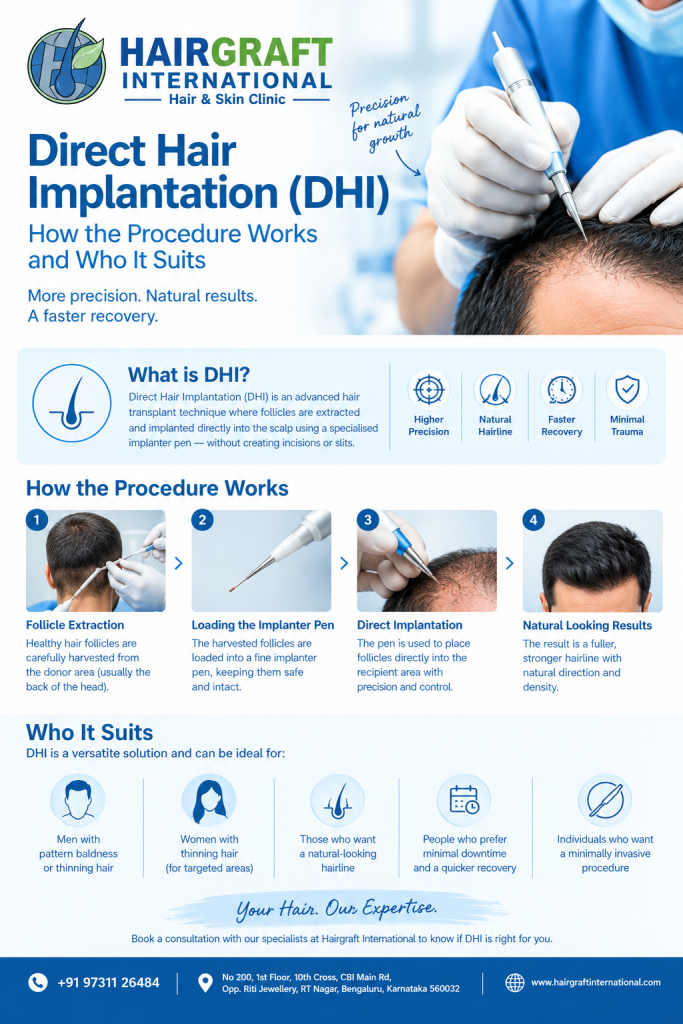
FUE — Follicular Unit Excision — is commonly used for harvesting individual follicular units.
During FUE, follicles are individually removed using small punches rather than removing a strip of skin. The harvested grafts are then prepared for implantation.
When beard hair itself is being used as the donor source, the International Society of Hair Restoration Surgery notes that FUE is the appropriate harvesting method because a strip procedure is not suitable for harvesting beard follicles.
4. Recipient Site Creation
Once the donor grafts are prepared, tiny recipient sites are created in the areas requiring additional beard density.
The angle, direction, spacing, and distribution of these sites are critical. Facial hair has a distinctive growth pattern, and placing grafts without considering natural direction can produce an unnatural appearance.
The surgeon therefore plans the implantation pattern carefully to blend new follicles with the patient’s existing facial hair.
5. Graft Implantation
The prepared follicular units are then placed into the recipient sites.
The surgeon aims to achieve a natural distribution rather than simply maximizing the number of hairs. Density can vary across different areas of the beard, and the final pattern is designed according to the patient’s facial structure and treatment objectives.
The procedure may involve traditional forceps placement or specialized implanter techniques, depending on the surgeon’s approach and the individual case.
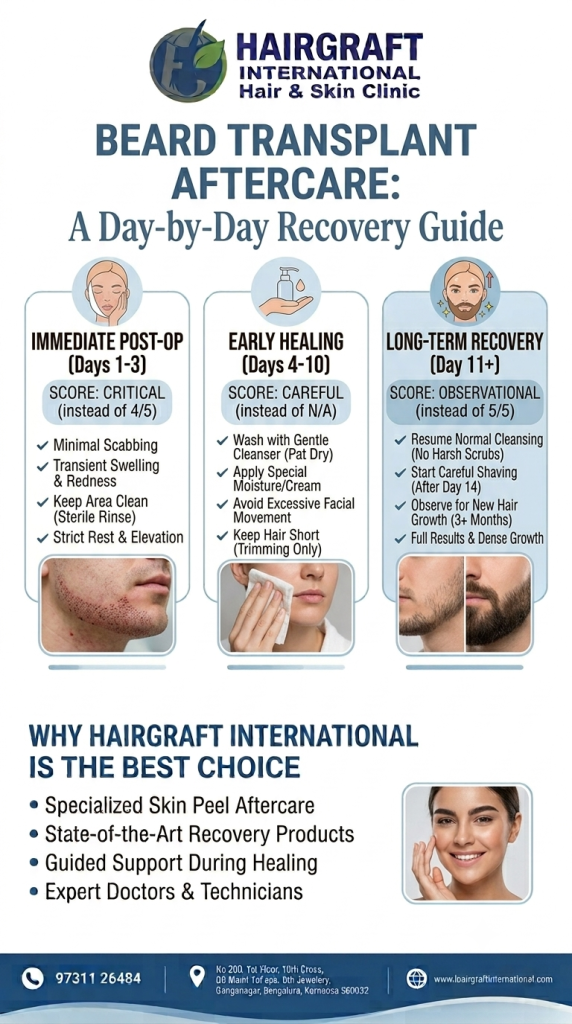
Beard Transplant Recovery
Recovery after a beard transplant is generally manageable, but patients should follow their surgeon’s instructions carefully.
During the first few days, patients may experience some redness, mild swelling, tenderness, or small crusts around the transplanted and donor areas. These effects vary from person to person.
Small scabs can form where grafts have been harvested and where follicles have been implanted. Patients should avoid picking or prematurely removing these crusts because the transplanted grafts need time to become secure. The surgeon will provide specific instructions regarding washing, shaving, exercise, and other activities.
Most patients can gradually return to their normal routine according to their individual recovery and their doctor’s advice.
When Will Beard Transplant Results Appear?
Beard transplantation requires patience because transplanted follicles do not produce an instant final result.
It is normal for some of the transplanted hairs to shed during the early post-operative period. This does not necessarily mean that the transplant has failed. The follicle remains beneath the skin and can subsequently enter a new growth cycle.
New growth commonly begins several months after transplantation, while density continues to improve gradually.
The ISHRS notes that overall beard-transplant growth can be assessed around 10–14 months, although the exact timeline varies between individuals.
Once fully established, transplanted beard hair is intended to be long-lasting. However, individual outcomes depend on factors such as donor quality, graft survival, recipient-area characteristics, surgical technique, healing, and the patient’s biology.
Is Beard Transplant Surgery Right for You?
A beard transplant may be considered by men who have stable areas of sparse or absent facial hair and who have sufficient donor follicles for transplantation.
However, not everyone is an ideal candidate for the same procedure or density. A medical assessment is important before deciding on surgery.
The doctor should evaluate the donor area, recipient skin, existing facial hair, medical history, expectations, and the desired beard design. Active skin conditions or inflammation in the recipient area may need to be addressed before transplantation.
As with any surgical procedure, beard transplantation can involve risks such as bleeding, infection, swelling, scarring, graft loss, and an unnatural appearance if the procedure is not appropriately planned or performed. Choosing a properly qualified medical professional and following post-operative instructions are important parts of safe hair restoration.
Beard Transplant at Hairgraft International
At Hairgraft International Hair & Skin Clinic, beard and moustache restoration is offered as part of our facial hair transplant services in Bengaluru.
Our approach begins with understanding your existing beard pattern and the look you want to achieve. Treatment planning considers facial proportions, donor-area availability, hair characteristics, beard density, and natural hair-growth direction.
Our facial hair transplant service can be used to address patchy beard growth, sparse moustache areas, uneven beard density, sideburns, chin areas, and selected scar-related gaps.
Hairgraft International follows a personalized treatment approach with consultation, assessment, surgical planning, and post-treatment follow-up. Our clinic’s facial hair transplant service is designed around creating natural-looking beard density rather than an artificial or overly uniform appearance.
Ready for a Fuller, More Defined Beard?
If patchy or sparse facial hair is affecting the way you feel about your appearance, a personalized beard transplant consultation can help you understand what is realistically achievable for your facial structure and donor area.
Book your consultation with Hairgraft International today and speak with our hair restoration team about your beard, moustache, or facial hair restoration goals.
Hairgraft International Hair & Skin Clinic
No. 200, 1st Floor, 10th Cross, CBI Main Road, Opp. Riti Jewellery, Ganganagar, Bengaluru, Karnataka 560032
Call: +91 97311 26484
Hairgraft International — Advanced Hair & Facial Hair Restoration
From beard and moustache restoration to advanced scalp hair transplant procedures, Hairgraft International provides personalized hair restoration solutions designed around each patient’s individual needs. Our focus is on careful planning, medical expertise, natural-looking outcomes, and supportive follow-up throughout the treatment journey.
Book your consultation today and take the first step toward a fuller, naturally designed beard.