Hair loss can change how you see yourself, and a transplant is one of the few options that gives permanent results. Direct Hair Implantation (DHI) is a modern technique that lets the surgeon control exactly where and how each hair graft is placed. This guide explains how it works, why it’s done, and what to expect.
What is DHI?
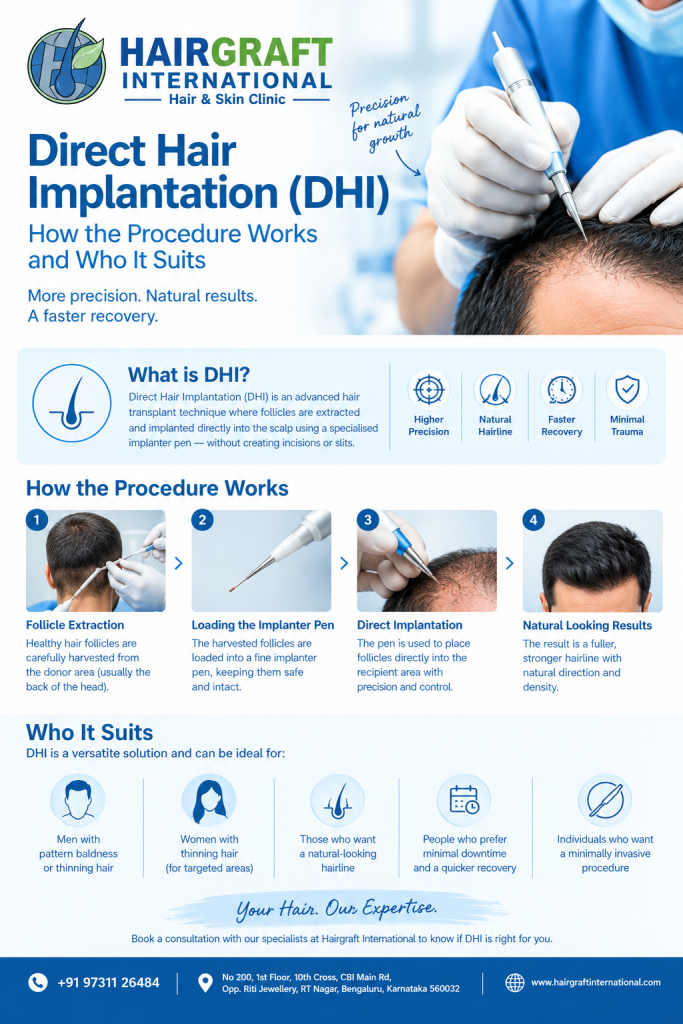
DHI is a hair transplant method in which individual follicular units are extracted from the donor area, loaded into a pen-like implanter, and placed directly into the scalp. Unlike conventional FUE, it doesn’t need pre-made channels for the grafts. The extraction and the implantation are both done one graft at a time.
How the DHI procedure is done
- Consultation and hairline design: the doctor examines your scalp, assesses the extent of hair loss and the density of your donor area, and designs a hairline that suits your face.
- Preparation and anaesthesia: the donor area is trimmed and numbed with local anaesthesia, so you stay comfortable during the procedure.
- Extraction: follicular units are removed individually from the back and sides of the scalp, which are naturally resistant to pattern hair loss.
- Loading the implanter: each graft is loaded into the pen-like implanter.
- Direct implantation: the doctor sets the angle, direction and depth, and places each graft in a single step.
- Aftercare: you receive washing instructions, medication and follow-up appointments.
Why is DHI done?
Hair loss from pattern baldness is progressive, and medication alone can’t bring back areas that have already lost their follicles. DHI is done to:
- Rebuild the hairline and temples with careful control of angle and direction
- Add density between existing hairs without disturbing them
- Keep grafts out of the body for a shorter time
- Create a natural-looking result
Who is DHI best suited for?
- People who want to add density while keeping their existing hair
- Those who need hairline or temple refinement
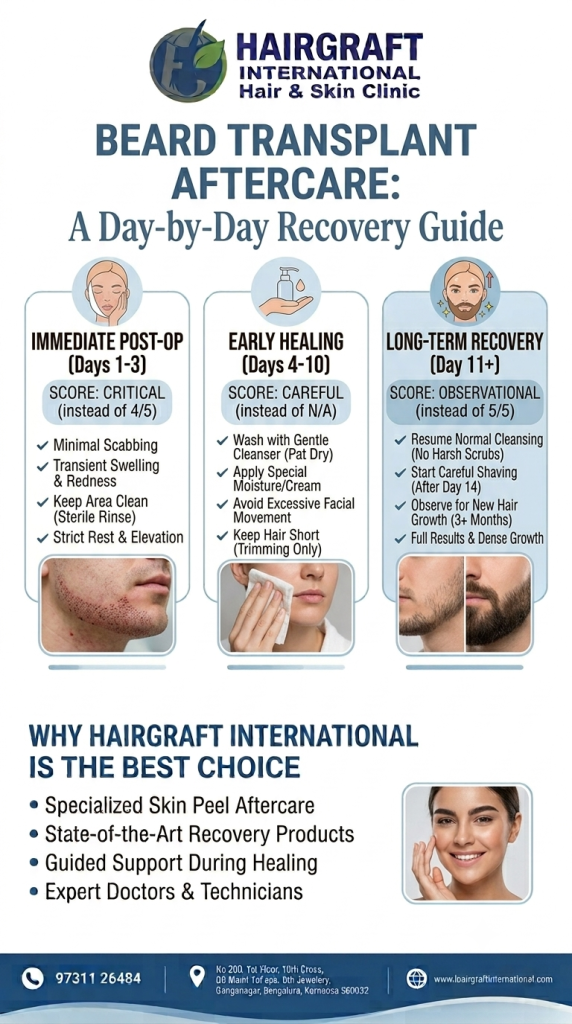
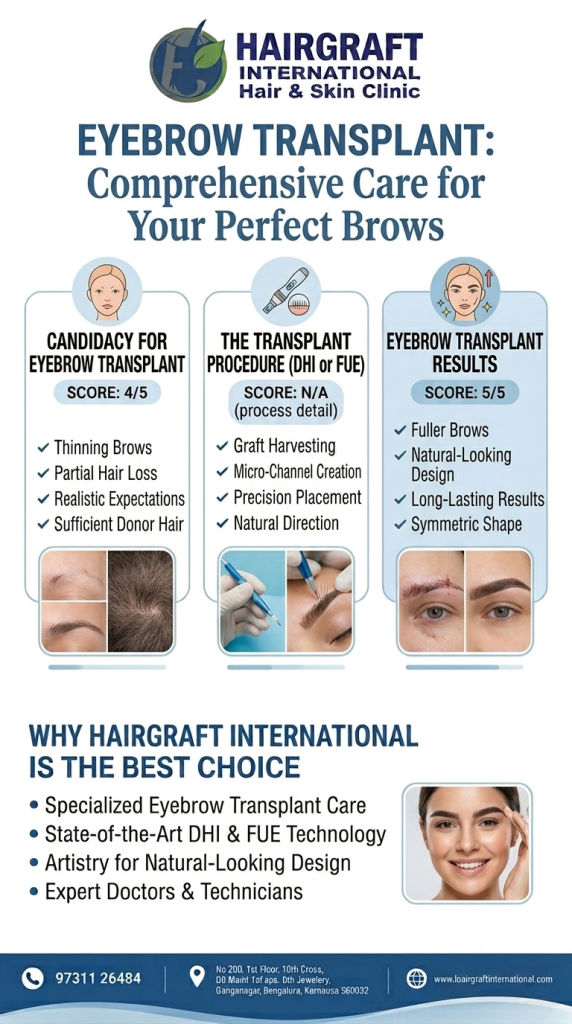
- People who need eyebrow or beard restoration, where angle control matters
- Anyone with enough healthy donor hair, confirmed at consultation
What are the limits of DHI?
- It is usually slower and costlier than conventional FUE.
- Very large areas of baldness may need more than one session.
- A transplant doesn’t stop your native hair from continuing to thin. A long-term plan, such as medication and PRP or GFC therapy, helps protect the result.
Recovery: what to expect
Mild redness, scabbing and swelling in the first week or two are common. Transplanted hairs typically shed in the first few weeks, and new growth begins over the following months. Full results take around 9 to 12 months, and timelines vary from person to person.
How does DHI treat hair loss compared with other options?
| Option | What it does | Suits |
|---|---|---|
| DHI | Places each graft directly with precise control | Hairline work, adding density |
| FUE | Extracts grafts and places them in pre-made channels | Larger sessions |
| Medication, PRP, GFC | Slows loss and supports existing hair | Early thinning |
| Non-surgical fixing | Covers hair loss without surgery | Those who prefer no surgery |
The best treatment depends on your degree of hair loss, your donor hair and your goals. Often a combination works best.
Frequently asked questions
Is DHI painful?
The procedure is done under local anaesthesia. Most people report mild discomfort afterwards, managed with medication.
Is DHI better than FUE?
Neither is better for everyone. DHI gives greater control at the hairline, while FUE is often better suited to larger areas. The surgeon’s skill matters more than the technique name.
Are the results permanent?
Transplanted hair comes from areas resistant to pattern baldness, so it is long-lasting. Your native hair can still thin, which is why a maintenance plan matters.
How long before I see results?
New growth usually starts a few months after the procedure, with full results at 9 to 12 months.
Book a consultation
The right technique can only be decided after an in-person examination. Book a consultation with the doctors at Hairgraft International to get a plan designed for your hair