Skin naturally loses volume, elasticity and glow with age, and while injectables like Botox and fillers can soften the visible signs, some patients want a more natural approach, one that uses the body’s own healing ability rather than an external substance. The Vampire Facelift does exactly that.
What is a Vampire Facelift?
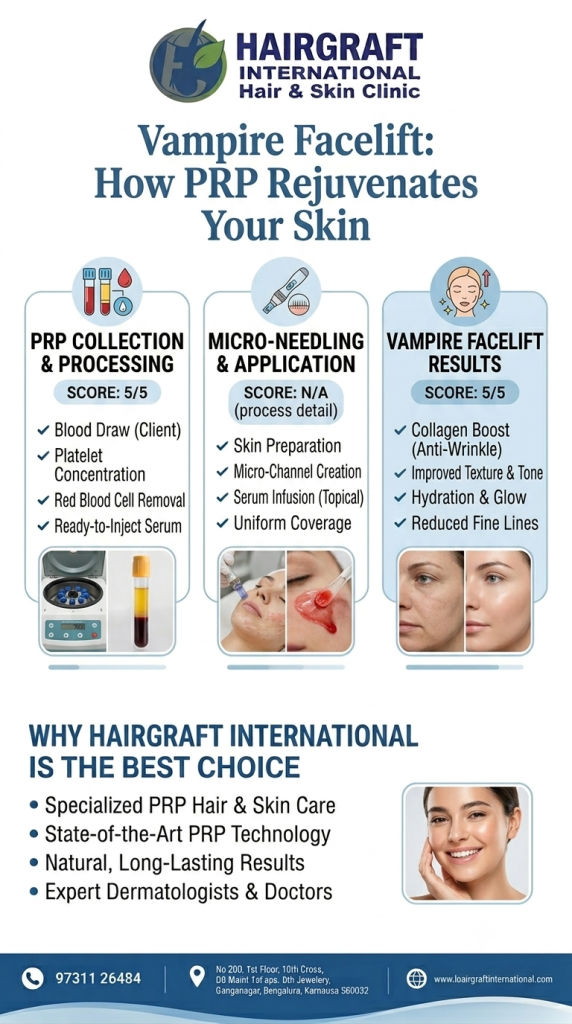
A Vampire Facelift is a cosmetic procedure that uses Platelet-Rich Plasma (PRP), derived from your own blood, injected into the skin to stimulate collagen production and rejuvenate the face. Despite its dramatic name, the treatment is simply an advanced use of PRP, the same growth-factor-rich plasma also used in hair restoration.
Why is it done?
- To improve skin texture, tone and radiance
- To soften fine lines and early signs of ageing
- To restore a more youthful volume and glow without synthetic fillers
- To improve the appearance of acne scars and enlarged pores
- As a natural complement to Botox or fillers, or as a standalone treatment for those who prefer to avoid them
How the procedure is done
- Consultation: the doctor assesses your skin concerns and confirms you’re a suitable candidate.
- Blood draw: a small sample of your blood is drawn, similar to a routine blood test.
- PRP separation: the sample is spun in a centrifuge to separate the platelet-rich plasma from the rest of the blood.
- Numbing: a topical numbing cream is applied to the face for comfort.
- Injection: the PRP is injected into targeted areas of the face using fine needles, sometimes combined with micro-needling to enhance absorption.
- Aftercare: you’re given instructions on skincare and sun protection for the following days.
The entire procedure typically takes under an hour and is done on an outpatient basis.
What does it treat?
- Fine lines and early wrinkles
- Under-eye hollowness and dullness
- Uneven skin texture
- Mild acne scarring
- General loss of skin radiance and firmness
Who is a good candidate?
- Those with early signs of ageing looking for a natural rejuvenation option
- Patients who want to avoid synthetic fillers or Botox
- Those with mild acne scarring or textural concerns
- Generally healthy individuals with realistic expectations about gradual, natural-looking improvement
Recovery and downtime
Mild redness, swelling or bruising at the injection sites is common for a day or two. Most patients return to normal activities the same day or the day after, with makeup usually avoidable for 24 hours to let the skin settle.
When do results show?
Because PRP works by stimulating your body’s own collagen production, results build gradually rather than appearing instantly. Most patients notice improved texture and glow over 3 to 4 weeks, with fuller results developing over 2 to 3 months. A course of multiple sessions, spaced a few weeks apart, is usually recommended for the best outcome, followed by periodic maintenance sessions.
How is it different from Botox and fillers?
| Vampire Facelift (PRP) | Botox | Fillers | |
|---|---|---|---|
| What it uses | Your own blood plasma | A muscle-relaxing agent | A volumizing gel |
| What it treats | Overall texture, tone, mild scarring | Dynamic wrinkles (frown lines, crow’s feet) | Volume loss, static lines |
| Onset | Gradual, over weeks | Days | Immediate |
| Duration | Several months, builds with repeat sessions | 3 to 4 months | 6 months to 2 years, depending on the filler |
Many patients combine PRP with Botox or fillers for a more complete result, since each addresses a different aspect of skin ageing.
Honest expectations
A Vampire Facelift improves skin quality and gives a natural, gradual glow, but it isn’t a substitute for treatments that address deeper wrinkles or significant volume loss. It also isn’t a one-time fix. Because it relies on the body’s own regenerative response, results vary between individuals, and maintenance sessions are needed to sustain the improvement.
Frequently asked questions
Is a Vampire Facelift safe?
Since it uses your own blood, the risk of allergic reaction is very low. As with any injectable procedure, it should only be done by a qualified professional in a clinical setting.
Does it hurt?
A topical numbing cream is applied beforehand, so most patients report only mild discomfort during the injections.
How many sessions will I need?
This depends on your skin condition and goals, typically a course of 3 to 4 sessions spaced a few weeks apart, followed by maintenance sessions every several months.
Can I combine it with Botox or fillers?
Yes, many patients do, though the doctor will advise on spacing and sequencing at consultation.
Book a consultation
If you’re looking for a natural way to rejuvenate your skin using your body’s own healing process, book a consultation with the team at Hairgraft International to find out if a Vampire Facelift is right for you.