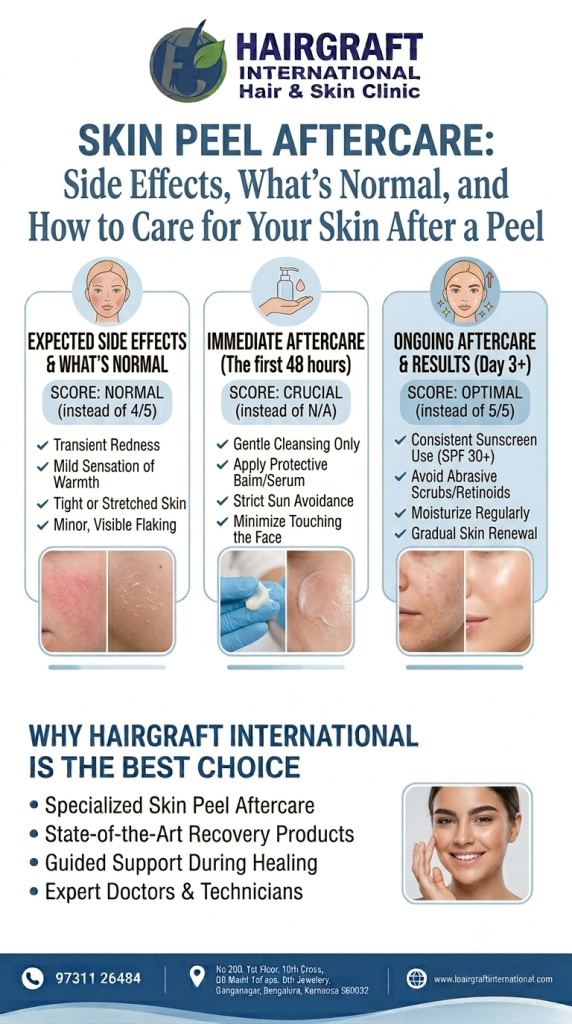
Why aftercare matters as much as the peel itself
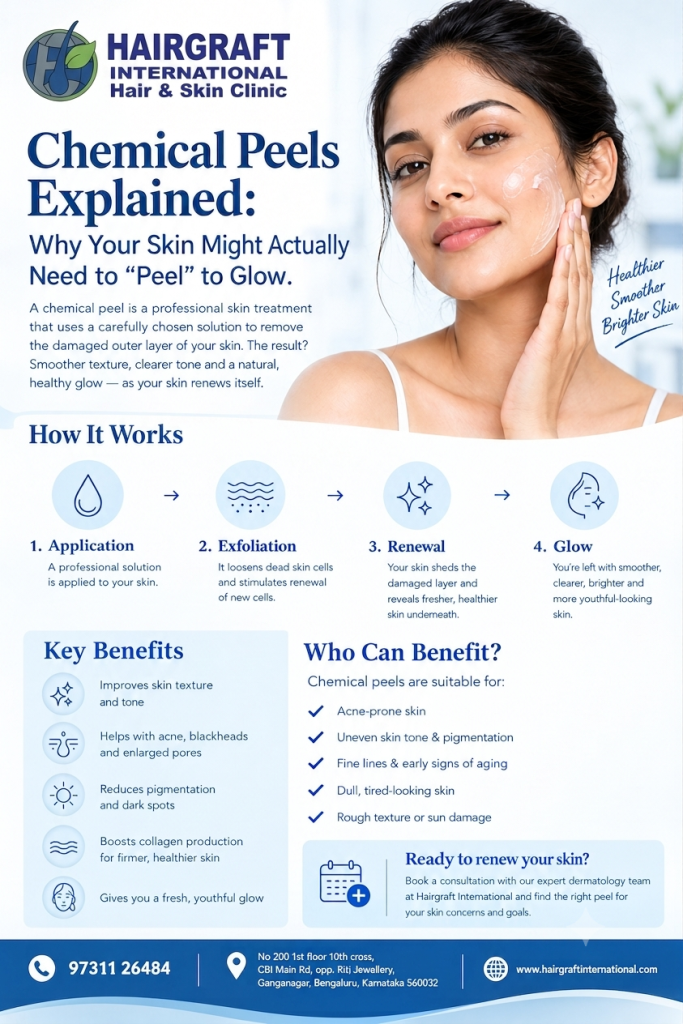
A chemical peel works by deliberately removing the damaged outer layer of skin so fresher skin can surface. That means the days after your peel are just as important as the treatment itself; how you care for your skin during this window determines whether you get smooth, even results or unnecessary irritation, pigmentation or scarring.
What actually happens to your skin after a peel
Peels work at different depths, superficial, medium or deep, and the after-effects scale accordingly. In general, the treated skin becomes more fragile, more sensitive to sun, and goes through a visible shedding or flaking phase as the outer layer comes off and new skin is revealed underneath.
Normal side effects after a peel
These are expected and usually resolve on their own:
- Redness, similar to a mild sunburn, most noticeable in the first 24 to 48 hours
- Tightness or mild stinging, especially right after the peel
- Flaking or peeling, typically starting around day 3 and continuing for several days, this is the treated layer shedding
- Mild swelling, more common with medium-depth peels, especially around the eyes
- Temporary darkening of the skin, before it flakes off, sometimes mistaken for pigmentation getting worse
Signs that need medical attention
While mild irritation is normal, these are not:
- Blistering
- Intense pain that doesn’t settle
- Signs of infection: increasing redness, warmth, pus or fever
- Skin that turns white or grey (a sign of a deeper reaction than intended)
If any of these occur, contact your clinic promptly rather than waiting it out.
Day-by-day aftercare guide
Day 1 to 2:
- Avoid touching, picking or scrubbing the skin
- Use only the gentle cleanser recommended by your clinic
- Apply a broad-spectrum sunscreen (SPF 30 or higher) every morning, even if staying indoors
- Skip makeup unless your provider says it’s fine
Day 3 to 5:
- Flaking usually begins; let it happen naturally, do not peel or pick at loosening skin, since this can cause scarring or pigmentation
- Keep the skin moisturised with a gentle, fragrance-free moisturiser
- Continue strict sun protection
Day 5 to 7:
- Most flaking settles down by this point, depending on the depth of the peel
- Gradually reintroduce your normal skincare routine, but hold off on active ingredients (retinoids, exfoliating acids) until your clinic confirms it’s safe
- Skin may still look slightly pink; this is normal
Week 2 onward:
- Skin texture and tone typically start looking noticeably fresher
- Full results, especially for pigmentation and texture concerns, continue to improve over several weeks
What to avoid after a peel
- Direct sun exposure, treated skin is significantly more vulnerable to UV damage and pigmentation
- Picking or peeling flaking skin manually, this is the single biggest cause of post-peel scarring and dark marks
- Hot showers, saunas or steam rooms, heat can aggravate sensitive, healing skin
- Exfoliating scrubs, retinoids or acids, until your provider clears you to resume them
- Waxing or threading the treated area until fully healed
- Strenuous exercise that causes heavy sweating, for the first few days, since sweat can irritate freshly treated skin
Sun protection: the single most important rule
Freshly peeled skin has little to no protective barrier against UV rays. Sun exposure during this period is the most common cause of post-inflammatory pigmentation, dark patches that can take months to fade. A broad-spectrum sunscreen, reapplied through the day, along with a hat when outdoors, isn’t optional in the days and weeks after a peel.
How aftercare differs by peel depth
| Superficial peel | Medium peel | Deep peel | |
|---|---|---|---|
| Typical downtime | 1-3 days | 5-7 days | 1-2 weeks or more |
| Flaking | Light | Noticeable | Significant |
| Sun sensitivity | Increased | Higher | Highest |
| Follow-up needed | Usually minimal | Recommended | Often required |
Your clinic will tell you which category your peel falls into and adjust the aftercare instructions accordingly.
Why results can look worse before they look better
It’s common for skin to look more flushed, patchy or textured in the first few days after a peel, this is part of the process, not a sign that something has gone wrong. The improved tone and texture typically become visible only after the flaking phase completes.
Honest expectations
A single peel gives a noticeable refresh, but for concerns like pigmentation, acne scarring or significant texture issues, a course of multiple sessions is usually needed for meaningful, lasting change. Skipping aftercare instructions, especially sun protection, can undo much of the benefit or even worsen pigmentation.
Frequently asked questions
How long does peeling last after a chemical peel?
This depends on the depth of the peel, typically 3 to 7 days for superficial to medium peels, longer for deeper peels.
Can I wear makeup after a peel?
Usually not for the first day or two, and only once your clinic confirms the skin has settled enough. Non-comedogenic makeup is generally preferred once resumed.
Is it normal for my skin to look darker before it flakes?
Yes, this is often a normal part of the process as the treated layer prepares to shed.
When can I resume my regular skincare routine?
Typically after the flaking phase settles, usually around a week for milder peels, but always confirm with your clinic before reintroducing active ingredients.
What if I accidentally peel the skin early?
Avoid it if you can, since it raises the risk of scarring or pigmentation. If it happens, keep the area clean and moisturised and contact your clinic if it looks irritated or doesn’t heal normally.
Book a consultation
The right peel, and the right aftercare, depends on your skin type and concern. Book a consultation with the team at Hairgraft International to find a peel suited to you, along with a clear aftercare plan.