Biofibre is one of the more unique solutions in modern hair restoration — a synthetic hair implantation technique that offers immediate, dense coverage without relying on your own donor hair supply. It’s a genuinely different approach from a natural hair transplant, and understanding exactly how it works helps clarify who it’s actually suited for.
What Biofibre Treatment Actually Is
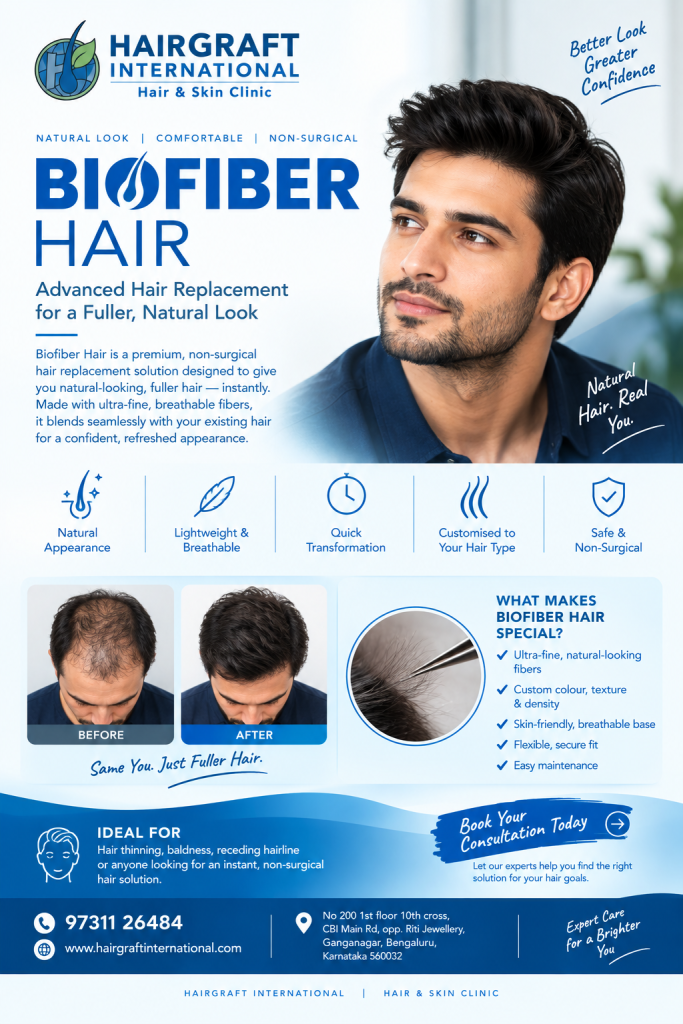
Biofibre involves implanting biocompatible synthetic hair fibers directly into the scalp, strand by strand, to create the appearance of natural hair density and coverage. Unlike a hair transplant, which relocates your own living follicles from a donor area, Biofibre fibers are manufactured, keratin-based synthetic strands designed to closely mimic the look, texture, and movement of natural human hair.
Because the fibers are implanted rather than grown, coverage and density are entirely controlled by the treatment plan rather than being limited by your own donor hair availability. This makes it fundamentally different from a transplant in both process and possibility, particularly for patients where donor supply is a limiting factor.
How the Implantation Procedure Works
Step one: consultation and density planning. Before treatment begins, your practitioner assesses your hair loss pattern and discusses your desired density, hairline shape, and overall coverage goals. Since Biofibre isn’t limited by donor supply, this conversation focuses more on your aesthetic goals than on what’s biologically achievable, which is a meaningful difference from transplant planning.
Step two: fiber and color matching. Biofibre strands are available in a range of colors and textures, matched as closely as possible to your natural hair to ensure the implanted fibers blend seamlessly with your existing hair.
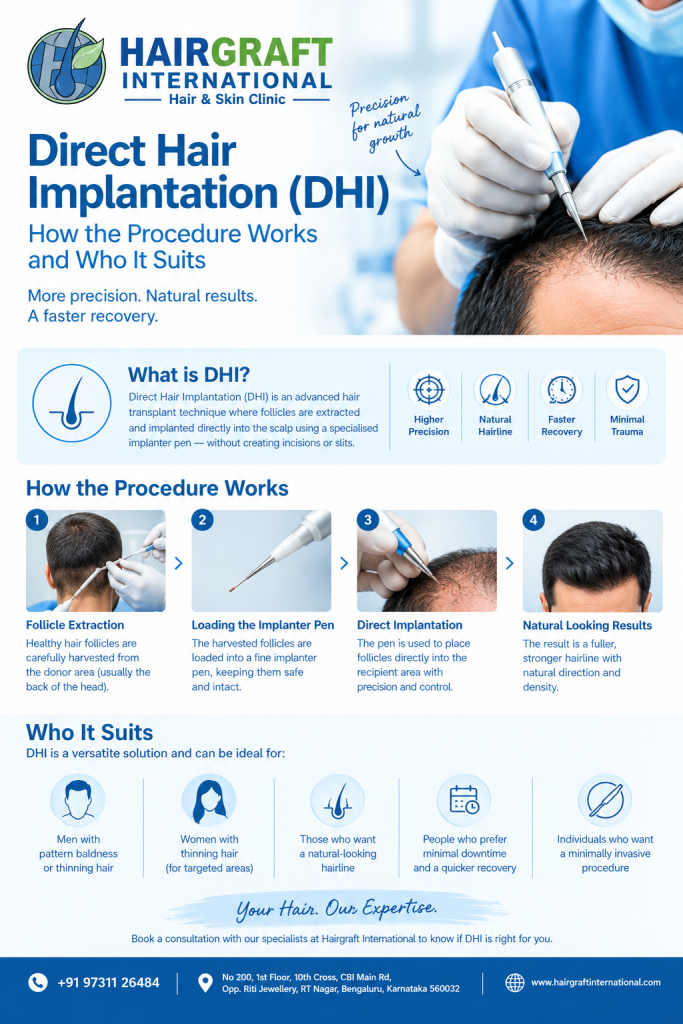
Step three: the implantation process. Using a specialized implantation device, individual synthetic fibers are inserted into the scalp at a controlled depth and angle, designed to replicate natural hair growth direction and pattern. The procedure is performed under local anesthesia, and unlike a transplant, there’s no donor site involved at all, since no hair is being harvested from elsewhere on your scalp.
Step four: gradual density building. Depending on the level of coverage desired, Biofibre treatment may be completed in a single session or built up gradually across multiple sessions, allowing your practitioner to assess how the initial fibers settle and integrate before adding further density.
Step five: initial healing. Following implantation, mild redness and small scabbing at each implantation point is normal for the first several days, similar in nature to the healing process seen with hair transplant procedures, though generally with a comparably short recovery window.
Immediate Results, With an Important Caveat
One of Biofibre’s most appealing qualities is that results are visible essentially immediately after the procedure, unlike a transplant, where visible growth takes many months to appear. This makes it an attractive option for patients wanting fast, dramatic coverage without a long waiting period.
The important caveat is that, because the fibers are synthetic rather than living, they don’t grow, and they aren’t a permanent, one-time solution in the way a successful transplant can be. Instead, Biofibre requires an ongoing maintenance relationship with the clinic to remain looking full and natural over time, which is a meaningfully different long-term commitment compared to a transplant.
Aftercare and Ongoing Maintenance
Because the implanted fibers don’t grow or renew themselves biologically, some fiber loss over time is a normal, expected part of having Biofibre treatment, generally due to natural fiber turnover and minor loss during washing or styling. Most patients require periodic touch-up sessions, typically every several months, to replace lost fibers and maintain consistent density.
Day-to-day care is relatively straightforward: gentle washing with clinic-recommended products, avoiding harsh chemical treatments directly on the implanted area, and gentle handling during styling to minimize unnecessary fiber loss between maintenance visits. Patients who stay consistent with recommended touch-up sessions tend to maintain the most natural, full appearance over the long term.
Who Biofibre Is Best Suited For
Patients with limited or insufficient donor hair. Since Biofibre doesn’t rely on your own donor supply at all, it’s a particularly strong option for patients with advanced hair loss where there isn’t enough healthy donor hair remaining to achieve meaningful coverage through a transplant.
Patients wanting immediate, dramatic density. For patients with an important upcoming event or simply wanting fast results without waiting months for transplant regrowth, Biofibre offers a same-day visible transformation.
Patients comfortable with ongoing maintenance visits. Because Biofibre requires periodic touch-ups to maintain density, it suits patients who are comfortable committing to regular follow-up visits, rather than those seeking a completely hands-off, one-time solution.
Patients looking to add density without surgery on a donor area. Since there’s no strip removal or follicle extraction involved, Biofibre avoids any donor-site healing or scarring considerations entirely, which some patients specifically prefer.
Who Might Want to Consider a Different Option
Patients wanting a fully permanent, one-time solution requiring no ongoing maintenance are generally better suited to a hair transplant, provided they have sufficient donor hair available. Patients with sensitivities or specific concerns about synthetic material implantation should discuss this openly during consultation, since individual scalp reactions, while uncommon with modern biocompatible fibers, are worth reviewing case by case with your practitioner.
What to Expect During Your First Visit
Your first Biofibre consultation involves a full assessment of your hair loss pattern and goals, fiber color and texture matching, and a clear walkthrough of the treatment plan, including how many sessions are recommended and what your ongoing maintenance schedule will look like going forward.
The Bottom Line
Biofibre offers a genuinely unique solution in hair restoration: immediate, donor-supply-independent density that doesn’t rely on your body’s own healing and growth process. It requires a different kind of long-term commitment compared to a transplant, with regular maintenance visits needed to sustain results, but for patients with limited donor hair or those wanting fast, dramatic coverage, it remains one of the most flexible options available.
Curious whether Biofibre is the right fit for your hair loss pattern and goals? Book a free consultation with our team at Hairgraft International to see real examples and get an honest assessment of what’s achievable for your case.
📞 Call us at 97311 26484 to schedule your consultation