Among the newer non-surgical treatments gaining traction in hair restoration clinics, GFC (Growth Factor Concentrate) therapy has emerged as one of the more scientifically interesting options, often discussed alongside, or sometimes as an evolution of, PRP. Despite growing popularity, most people researching hair loss treatments have never had GFC properly explained to them, and it’s frequently confused with PRP simply because both involve processing a patient’s own blood. This guide walks through exactly what GFC is, how it differs from PRP, the procedure itself from start to finish, who it’s genuinely suited for, and what realistic results and timelines look like.
What GFC Treatment Actually Is
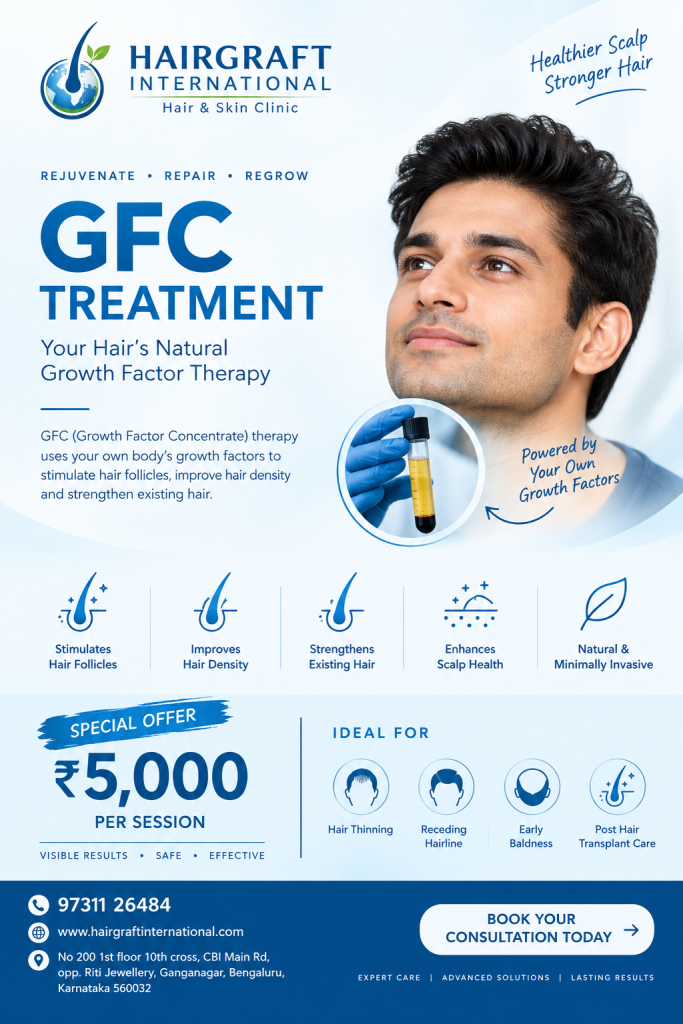
GFC, short for Growth Factor Concentrate, is a treatment derived from a patient’s own blood, similar in origin to PRP, but processed using a more advanced technique designed to isolate a significantly higher concentration of specific growth factors while removing white blood cells and other components that can trigger inflammation at the injection site.
The core idea behind GFC is the same underlying principle as PRP: growth factors naturally present in blood play a central role in tissue repair and regeneration, and concentrating them before injecting them into the scalp is believed to stimulate weakened or dormant hair follicles, improve local blood supply, and support a healthier growth cycle. Where GFC differs is in both the concentration and purity of the growth factors delivered, and in the processing method used to achieve that concentration.
How GFC Differs From PRP
This is the question most patients researching the treatment actually want answered, since the two are frequently mentioned in the same breath, and some clinics use the terms loosely or interchangeably in their marketing, which only adds to the confusion.
Processing method. PRP is typically produced through a single centrifugation step that separates platelet-rich plasma from red and white blood cells, though some platelets and a portion of white blood cells often remain in the final solution. GFC processing generally involves additional steps beyond a single spin, using specialized kits designed to filter out red and white blood cells more thoroughly while concentrating growth factors to a notably higher degree than standard PRP protocols typically achieve.
Growth factor concentration. Because of this more refined processing, GFC solutions generally contain a meaningfully higher concentration of key growth factors, such as platelet-derived growth factor, vascular endothelial growth factor, and epidermal growth factor, compared to standard PRP. Some manufacturers and clinics report concentrations several times higher than typical PRP preparations, though exact figures vary depending on the specific kit and protocol used.
White blood cell content. Standard PRP preparations often retain a portion of white blood cells, which can contribute to mild inflammation at the injection site. GFC processing is generally designed to filter out most white blood cells, which proponents argue results in less post-procedure discomfort and potentially a more targeted regenerative effect, since inflammation from residual white blood cells is reduced.
Reported comfort and downtime. Because of the reduced white blood cell content, many patients and clinics report that GFC sessions involve less redness, swelling, and discomfort immediately afterward compared to standard PRP, allowing for a quicker return to normal activity, though individual experiences vary.
It’s worth being direct about the state of the evidence here: while the theoretical basis for GFC’s advantages over PRP is reasonably sound given what’s understood about growth factor concentration and inflammation, head-to-head clinical research directly comparing long-term hair regrowth outcomes between GFC and standard PRP remains more limited than research on PRP alone, which has a longer research history. Much of the current preference for GFC over PRP in clinical practice is based on the theoretical processing advantages and patient comfort reports rather than a large body of independent, peer-reviewed comparative trials specifically measuring hair density outcomes.
The GFC Procedure, Step by Step
Understanding exactly what happens during a GFC session can help ease any uncertainty for patients considering the treatment for the first time.
Step one: consultation and scalp assessment. Before any GFC session, a proper evaluation of your scalp, hair loss pattern, and donor density is essential, generally including a hands-on examination and sometimes magnified imaging to assess follicle health and miniaturization. This determines whether GFC is an appropriate treatment for your specific stage of hair loss, or whether it should be combined with other treatments, or whether a different approach entirely, such as a hair transplant, is more suitable.
Step two: blood draw. A relatively small sample of blood, typically comparable in volume to a routine blood test, is drawn from the patient’s arm using standard sterile technique.
Step three: processing. The blood sample is processed using a specialized GFC kit and centrifuge system, which separates and concentrates the growth-factor-rich component of the plasma while filtering out red blood cells and the majority of white blood cells. This processing step typically takes a matter of minutes, though total time in the clinic including setup and processing is usually closer to twenty to thirty minutes.
Step four: scalp preparation. The scalp is cleaned and, in many clinics, a topical numbing agent is applied to minimize discomfort during the injection process, since the scalp can be a sensitive area for injections.
Step five: injection. The concentrated GFC solution is injected into the scalp using fine needles, targeting the areas of thinning at the depth appropriate for reaching the hair follicles. Injections are typically distributed evenly across the treatment area in a grid-like pattern to ensure consistent coverage.
Step six: aftercare instructions. Following the injections, patients are typically given straightforward aftercare guidance, including avoiding strenuous exercise, direct sun exposure, and hair washing for a short period, usually the remainder of the treatment day, along with guidance on managing any mild redness or tenderness.
The entire process, from arrival to completion, typically takes under an hour for most patients, making it a convenient in-clinic procedure that doesn’t require significant time away from work or daily responsibilities.
Who GFC Is Recommended For
Patients with early to moderate hair thinning. Similar to PRP, GFC tends to show the most meaningful benefit in patients whose follicles are still present and active, even if weakened or miniaturized, rather than in areas that have been fully bald for an extended period.
Patients who experienced discomfort or inflammation with standard PRP. Because GFC processing removes more white blood cells, patients who found standard PRP sessions uncomfortable or who experienced more pronounced redness and swelling may find GFC a more tolerable option.
Patients looking for a treatment with reduced downtime. Given the generally milder post-procedure reaction reported with GFC, it can be a good fit for patients who want minimal disruption to their routine immediately following treatment.
Patients using it alongside a hair transplant. Like PRP, GFC is increasingly used as a complementary treatment around hair transplant surgery, either to support graft survival during the healing period or to help maintain the health of native hair surrounding a transplanted area.
Patients with diffuse thinning, including many women. Since GFC works locally on existing follicles rather than depending on the specific hormonal mechanism behind hair loss, it’s a reasonable option for both male and female pattern hair loss, as well as some other causes of diffuse thinning, once other underlying causes have been appropriately ruled out or addressed.
Who GFC Is Less Likely to Help
As with any growth-factor-based treatment working on existing follicles, GFC has real limitations worth understanding honestly. Patients with fully bald, long-standing areas of scalp with no remaining active follicles are unlikely to see meaningful benefit, since there’s nothing viable left for the growth factors to stimulate. GFC is also not an appropriate standalone treatment for autoimmune-driven hair loss like alopecia areata or for scarring alopecia, where the underlying disease process differs fundamentally from typical pattern hair loss.
Patients expecting transplant-level density restoration from GFC alone, particularly in cases of significant, established baldness, are likely to be disappointed. GFC, like PRP, is a supportive and preservative treatment for existing hair, not a way to regenerate hair in areas where follicles are no longer present.
What a Full Treatment Course Looks Like
GFC treatment protocols generally follow a similar structure to PRP, though exact recommendations vary by clinic and individual case. A typical initial course involves three to four sessions spaced roughly four weeks apart, followed by maintenance sessions every four to six months to sustain results over time. Because GFC’s higher growth factor concentration is sometimes associated with a stronger initial response compared to standard PRP, some clinics recommend slightly wider spacing between sessions or a smaller number of initial sessions, though this varies by protocol and patient response.
Most patients don’t notice a visible difference until after the second or third session, with more meaningful improvement in density and thickness typically becoming apparent around the four-to-six-month mark. As with PRP, ongoing maintenance sessions are generally necessary to sustain results long-term, since GFC supports and stimulates existing follicles rather than permanently altering the underlying biology driving hair loss.
What Recovery and Side Effects Actually Look Like
GFC is generally well tolerated, with most patients experiencing only mild, short-lived side effects. Some redness, minor swelling, or tenderness at injection sites is common in the hours following treatment, typically resolving within a day or two. Because GFC processing removes more white blood cells than standard PRP, many patients report a comparatively milder reaction than they experienced with PRP sessions in the past, if they’ve tried both.
Because the treatment uses a patient’s own blood, the risk of allergic reaction or rejection is minimal, which is one of the more reassuring aspects of the treatment for patients wary of injectable therapies in general. As with any injection-based procedure, proper sterile technique is essential, and this is one more reason clinic hygiene standards and staff experience should factor into where you choose to have the treatment performed.
The Science Behind Growth Factor Concentration
To understand why the additional processing steps in GFC actually matter, it helps to understand a bit more about what growth factors do biologically and why higher, purer concentrations are theorized to make a meaningful difference. Growth factors are signaling proteins that instruct cells to migrate, divide, and differentiate, playing central roles in wound healing and tissue regeneration throughout the body. In the context of hair follicles, specific growth factors are believed to help shift miniaturized follicles back toward a more active growth phase, encourage the proliferation of cells within the follicle’s growth center (the dermal papilla), and support the blood vessel network that supplies nutrients to actively growing hair.
Standard PRP contains a mix of these growth factors alongside residual white and red blood cells, which can partially dilute the concentration of the most relevant regenerative signals while also introducing components associated with inflammation. The additional filtration and concentration steps used in GFC processing are specifically designed to isolate a higher density of the growth factors believed to be most relevant to follicle stimulation, while minimizing the inflammatory components that don’t contribute to regeneration and may in fact work against patient comfort during recovery.
This is part of why some specialists describe GFC as a more “refined” or “purified” version of the same underlying biological approach used in PRP, rather than a completely different treatment category. The core biological premise, using the body’s own regenerative signaling molecules to support follicle health, remains the same; what changes is the purity and concentration of what’s actually being delivered to the scalp.
How Clinics Typically Combine GFC With Other Treatments
In practice, GFC is rarely used as a completely isolated, standalone intervention at most clinics offering it. It’s frequently incorporated into a broader treatment plan alongside other evidence-supported options, depending on the patient’s specific hair loss pattern and goals.
For patients with early-stage thinning, a common approach combines GFC sessions with a daily topical treatment like minoxidil, since the two work through complementary mechanisms: minoxidil supporting blood flow and extending the growth phase topically and continuously, while GFC delivers a concentrated dose of regenerative growth factors periodically through in-clinic sessions. For men with hormonally driven pattern loss, GFC is sometimes combined with finasteride as well, addressing the hormonal trigger systemically while GFC supports the health of follicles locally.
Around hair transplant procedures specifically, GFC is often scheduled either shortly before surgery to help optimize the health of the scalp and donor area, immediately after to support graft survival during the critical early healing window, or as an ongoing maintenance treatment in the months and years following surgery to help protect and strengthen the native hair surrounding the transplanted area. Combining treatments this way reflects a broader, increasingly common shift in hair restoration toward multi-modal treatment plans rather than relying on any single intervention in isolation.
Setting Realistic Expectations
One of the most important parts of any consultation involving GFC, or any growth-factor treatment, is walking away with genuinely realistic expectations rather than expecting dramatic, transplant-level transformation. GFC’s realistic role is to slow the progression of thinning, support and strengthen follicles that are still active, and in many patients, produce a modest but genuinely noticeable improvement in hair density and thickness over the course of a full treatment protocol.
Patients who go into GFC treatment understanding this, and who commit to the full recommended course rather than stopping after one or two sessions when results aren’t yet visible, tend to report the most satisfaction with the treatment. Conversely, patients expecting GFC alone to reverse years of established, advanced baldness are working against the treatment’s actual biological ceiling, regardless of how advanced or well-administered the treatment itself is.
GFC Compared to Hair Transplant Surgery
It’s worth being clear about where GFC fits relative to surgical hair restoration, since the two serve fundamentally different purposes. A hair transplant permanently relocates healthy, DHT-resistant follicles into areas of baldness, and can restore coverage even in zones that have been completely bald for years. GFC cannot recreate hair where follicles no longer exist; its role is supporting and strengthening follicles that are still present, whether used as a standalone early-intervention treatment or as a complementary therapy alongside transplant surgery.
For patients with early-stage thinning who aren’t yet candidates for, or interested in, surgical intervention, GFC can be a genuinely valuable option to slow progression and support existing hair. For patients with more advanced, established hair loss, GFC is generally better positioned as a complementary treatment around a transplant procedure, rather than a substitute for one.
Cost Considerations
GFC treatment is generally priced per session, with total cost depending on the number of sessions in the treatment course and whether it’s combined with other treatments like a hair transplant or additional medical therapy. Because GFC processing kits and equipment tend to be more specialized than standard PRP setups, GFC sessions are often priced somewhat higher than standard PRP per session, reflecting both the more advanced processing technology and, in many cases, the more refined patient experience it provides.
As with any treatment, it’s worth asking a clinic directly for a clear, itemized breakdown of what a full recommended course will cost, including maintenance sessions over the following year, rather than evaluating cost based solely on the price of a single session in isolation.
Questions Worth Asking Before Starting GFC
Coming prepared with specific questions can help you get a genuinely useful, individualized understanding of whether GFC is right for you. Worth asking directly: what stage is my hair loss at, and is GFC an appropriate treatment for that stage specifically, or would I benefit more from a different approach? What specific processing system or kit does the clinic use, and how does it compare to standard PRP in terms of growth factor concentration? How many sessions, realistically, before I should expect to see visible change, and what does the full recommended course cost including maintenance? And would combining GFC with another treatment, such as minoxidil or a hair transplant, offer better results than GFC used alone for my specific case?
Frequently Asked Questions
Is GFC painful?
Most patients describe GFC as mildly uncomfortable rather than painful, particularly since a topical numbing agent is typically applied before injections. Sensitivity varies by individual, and some areas of the scalp tend to be more sensitive than others.
How is GFC different from a hair transplant?
GFC is a non-surgical treatment that supports and stimulates existing, active hair follicles. A hair transplant is a surgical procedure that permanently relocates healthy follicles into areas of baldness. They serve different purposes and are often used together rather than as alternatives to each other.
Can GFC be used on a fully bald scalp?
No. Since GFC works by stimulating existing follicles, areas with no remaining active follicles won’t respond to treatment. GFC is most effective for early to moderate thinning where follicles are present but weakened.
How soon can I go back to work after a GFC session?
Most patients return to normal daily activities, including work, the same day or the following day, with only minor guidance to avoid strenuous exercise and direct sun exposure for a short period afterward.
Is GFC safe?
Since GFC uses a patient’s own blood, the risk of allergic reaction or rejection is minimal. As with any injectable procedure, safety also depends on proper sterile technique and an experienced clinical team performing the treatment.
What to Look for in a Clinic Offering GFC
Since GFC is a relatively newer, more specialized treatment compared to standard PRP, not every clinic offering hair loss treatments has the specific equipment, kits, or training to perform it properly. When evaluating a clinic for GFC treatment, it’s worth confirming a few specifics beyond simply whether the service is listed on their website or price menu.
Ask what specific GFC processing system or kit the clinic uses, since quality and consistency can vary between manufacturers and protocols. Confirm that the procedure is performed by a trained medical professional, not delegated entirely to non-medical staff, given that it involves both a blood draw and scalp injections. It’s also worth asking how many GFC sessions the clinic has performed and whether they can walk you through realistic, honest examples of the kind of results patients with a hair loss pattern similar to yours have seen, rather than relying solely on general marketing claims about the treatment’s effectiveness.
A clinic that can answer these questions clearly, and that positions GFC as one tool within a broader, individualized treatment plan rather than a blanket solution recommended to every patient regardless of their specific hair loss stage, is generally a stronger indicator of a genuinely knowledgeable, trustworthy provider.
The Bottom Line
GFC treatment represents a refined evolution of growth-factor-based hair loss therapy, offering a more concentrated, more purified alternative to standard PRP with generally milder post-procedure discomfort. Like PRP, it’s a genuinely useful tool for patients with early to moderate hair thinning and active, if weakened, follicles, and it works well as a complementary treatment alongside hair transplant surgery. It isn’t a solution for established baldness or a replacement for surgical restoration in advanced cases, and like any growth-factor treatment, it requires an ongoing maintenance schedule to sustain results over time.
—
Curious whether GFC is the right fit for your hair loss, or whether a different approach would serve you better? Book a free consultation with our doctors at Hairgraft International for an honest, hands-on scalp evaluation and a treatment plan built around what will actually work for your specific case.
📞 Call us at 97311 26484 to schedule your consultation