PRP (Platelet-Rich Plasma) therapy has moved from a niche treatment offered by a handful of specialty clinics to one of the most commonly recommended non-surgical options for hair loss across nearly every hair restoration clinic today. It’s also, unfortunately, one of the most misunderstood treatments in the entire hair loss category. This guide walks through exactly how PRP works, what the actual research shows, who benefits most, who it’s unlikely to help, and what a realistic treatment course looks like.
What PRP Actually Is
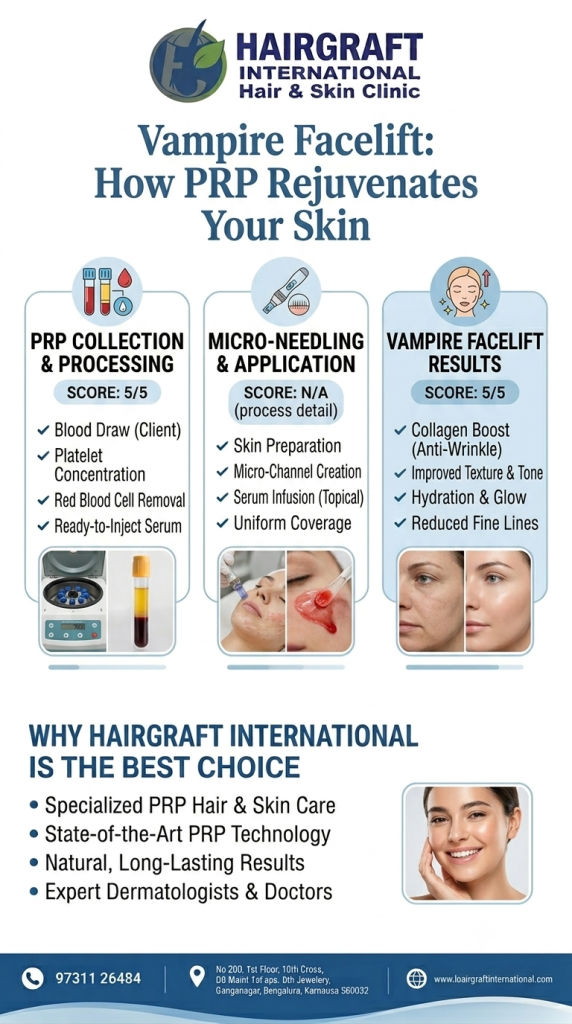
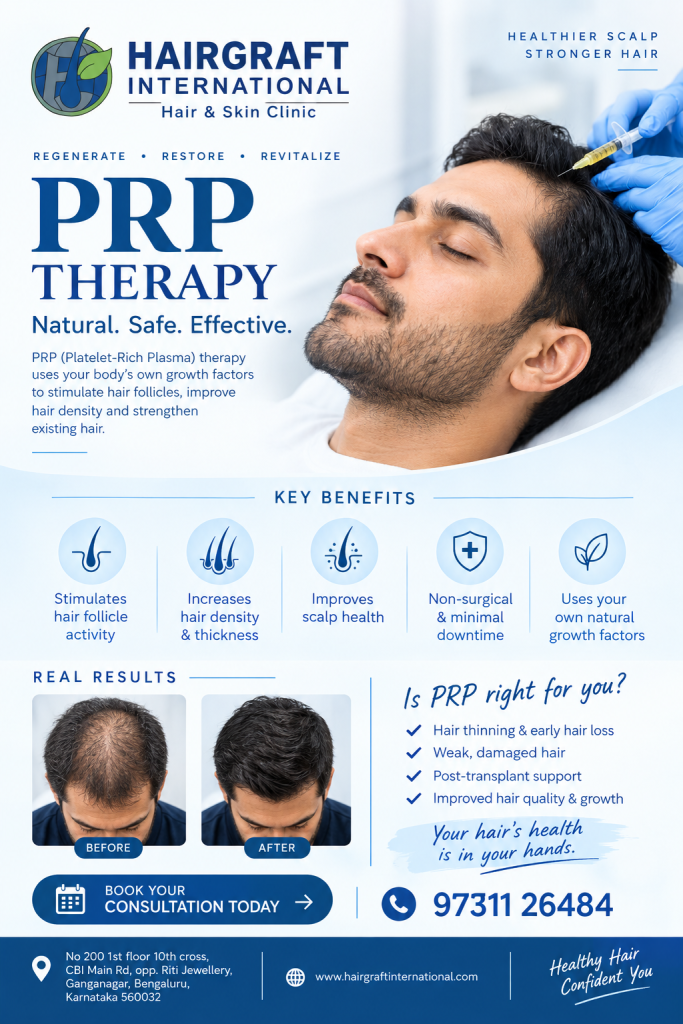
PRP involves drawing a small sample of your own blood, then spinning it in a centrifuge to separate the platelet-rich plasma from red blood cells and other components. Platelets contain growth factors and signaling proteins central to tissue repair. When injected into the scalp at follicle level, the theory is that these factors stimulate dormant or weakened follicles, improve blood supply, and extend the active growth phase of the hair cycle. Because the plasma comes from your own blood, there’s minimal risk of allergic reaction or rejection.
The Science Behind Why PRP Might Work
Each hair follicle cycles through growth (anagen), transition (catagen), and rest/shedding (telogen). In androgenetic alopecia, follicles gradually miniaturize over years rather than disappearing outright, producing progressively finer hairs until some stop growing altogether. Growth factors in PRP — including PDGF, VEGF, and TGF-beta — are believed to counteract this miniaturization in follicles that are still active, even if weakened. This mechanism only applies to follicles that still exist; PRP has no pathway to create new ones.
What the Evidence Actually Shows
Clinical studies have shown genuinely promising results for early-stage androgenetic alopecia, with several reporting measurable improvements in density and thickness versus placebo. That said, the research is considered moderate rather than definitive — sample sizes are often small, protocols vary between clinics, and individual results vary. PRP has real, evidence-backed potential, but it isn’t a guaranteed fix, and results are more modest and gradual than surgical restoration.
Who Actually Benefits From PRP
Early-stage androgenetic alopecia — the most consistently supported use case in research.
Patients looking to slow progression, not reverse existing baldness — PRP preserves and strengthens existing hair rather than regrowing hair in long-bald areas.
Post-transplant support — used to aid graft survival or protect surrounding native hair.
Diffuse thinning in women — often combined with topical minoxidil.
Combination protocols — PRP alongside minoxidil, finasteride, or microneedling tends to outperform any single treatment alone.
Who PRP Is Less Likely to Help
Fully bald, longstanding areas with no active follicles won’t respond, since there’s nothing left to stimulate. PRP isn’t effective standalone for alopecia areata or scarring alopecia, where the mechanism differs entirely. Patients expecting transplant-level density from PRP alone in advanced baldness are likely to be disappointed.
What a Treatment Course Actually Looks Like
A typical protocol involves 3–4 initial sessions spaced 3–4 weeks apart, followed by maintenance every 4–6 months. Each session takes 30–60 minutes. Mild tenderness or redness for a day or two is normal. Most patients don’t notice change until session two or three, with fuller results around month 4–6. This isn’t one-and-done — stopping maintenance typically means benefits gradually fade.
PRP Compared to Other Hair Loss Treatments
Compared to minoxidil, PRP is more invasive but doesn’t require daily application. Compared to finasteride, PRP works locally rather than systemically, avoiding that side-effect profile. Compared to a hair transplant, PRP is fundamentally different — a transplant permanently relocates DHT-resistant follicles and can restore coverage in fully bald zones, while PRP can only support hair that’s still present.
Is PRP Worth the Cost?
For early-stage thinning, PRP is often a reasonable investment, especially combined with minoxidil or finasteride. For advanced baldness, the cost-to-benefit ratio is weaker, and that budget is usually better directed toward a transplant. A good clinic will be upfront about which category you fall into after a real scalp evaluation.
What to Ask Before Starting PRP
What stage is my hair loss at, and is PRP appropriate for it? How many sessions before I’d see visible change? Can I see real results from patients with a similar pattern to mine? Would combining PRP with minoxidil or finasteride help more than PRP alone? What’s the full first-year cost, including maintenance?
The Bottom Line
PRP is a legitimate, evidence-supported treatment for early to moderate hair thinning, and a useful complementary tool alongside transplants — but it isn’t a cure for established baldness, and it requires ongoing maintenance to sustain results.
Not sure if PRP is right for your stage of hair loss? Book a free consultation with our doctors at Hairgraft International.
📞 Call us at 97311 26484 to schedule your consultation.