Scalp Micropigmentation (SMP) has become one of the most sought-after non-surgical solutions for hair loss, offering an entirely different approach compared to transplants, patches, or medical treatments. Rather than restoring hair itself, SMP creates the visual illusion of density or a closely shaved look using a specialized tattooing technique. Here’s a complete breakdown of what it actually involves, how the procedure works, and who it’s best suited for.
What Scalp Micropigmentation Actually Is
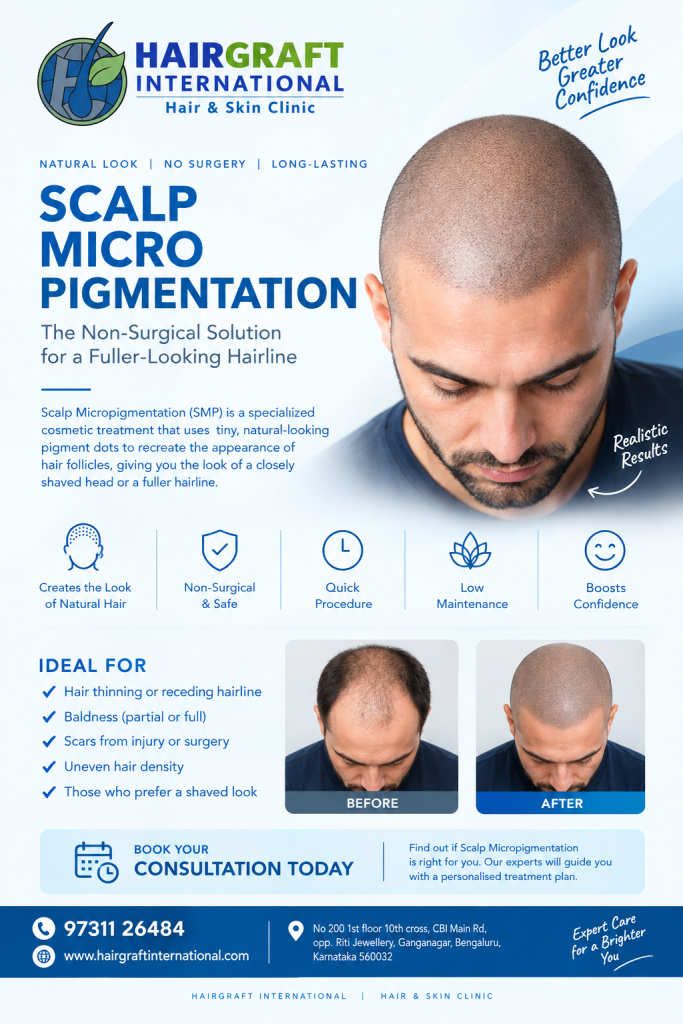
SMP is a cosmetic procedure in which tiny, precise pigment deposits are implanted into the scalp’s upper dermis layer, replicating the look of individual hair follicles. Unlike a traditional tattoo, which uses deeper ink deposits and can spread or fade unevenly over time, SMP uses specialized micro-needles and pigments specifically formulated to mimic the appearance of hair follicles at a natural density and angle.
The result, when done well, creates one of two effects depending on the patient’s goals: either the appearance of a closely buzzed, full head of hair (popular among patients with more advanced baldness who are comfortable with a shaved look), or added visual density in areas of thinning, layered among existing natural hair to make the scalp appear fuller.
How SMP Differs From a Traditional Tattoo
This is one of the most common points of confusion for people researching the procedure. While SMP technically involves depositing pigment into the skin, similar in principle to any tattoo, the technique, tools, and pigment formulation are specifically designed for this purpose and differ meaningfully from standard tattooing.
Standard tattoo ink is deposited more deeply and in larger, solid strokes, which is why traditional tattoos can look bold and graphic but would appear as solid blocks of color rather than individual hair-like dots if used to simulate hair. SMP uses a much finer needle, shallower pigment placement, and tiny, precise dot patterns applied individually to replicate the appearance of hair follicles at the scalp’s surface. The pigments used are also specifically formulated to fade evenly over time and resist the blue or green undertone that standard tattoo ink can develop as it ages, which is important for maintaining a natural, realistic look for years.
The SMP Procedure, Step by Step
Step one: consultation and design planning. Before any pigment is applied, a detailed consultation maps out your desired hairline shape, density goals, and overall look, taking into account your natural hair color, skin tone, and the pattern of your hair loss. This planning stage is critical, since the hairline design and pigment shade selected directly determine how natural the final result looks.
Step two: pigment matching. Pigment shade is carefully matched to your natural hair color (or, for patients going fully shaved, matched to create a natural-looking shadow effect against their skin tone) to ensure the result blends convincingly rather than looking artificial or mismatched.
Step three: the application process. Using a specialized micro-needle device, the practitioner applies tiny pigment deposits across the treatment area, replicating natural hair follicle patterns in terms of density, direction, and spacing. This isn’t a single pass; achieving a natural, layered look typically requires multiple sessions.
Step four: multiple sessions for depth and realism. Most SMP treatments are completed over two to four sessions, spaced one to two weeks apart. Each session builds on the last, adding depth, refining density, and allowing the practitioner to assess how the pigment is settling into the skin before adding further detail. This gradual, layered approach is what produces a realistic, three-dimensional look rather than a flat, uniform pattern.
Step five: healing between sessions. Between sessions, the scalp needs time to heal, with mild redness and slight scabbing in the treated area being normal for the first several days. Following clinic aftercare guidance, including avoiding sun exposure and excessive sweating during healing, helps pigment settle evenly and reduces the risk of uneven fading.
What the Results Look Like and How Long They Last
When performed well, SMP results can look remarkably natural, replicating the subtle variation in density and direction of real hair follicles rather than appearing as a flat, painted-on pattern. For patients choosing the shaved-head look, SMP effectively recreates the appearance of a few days’ hair growth evenly across the scalp. For patients using it to add density among existing hair, the pigment dots blend with natural strands to visually reduce the appearance of scalp show-through.
SMP is considered semi-permanent rather than permanent. Results typically last three to five years before some fading becomes noticeable, at which point a touch-up session can refresh the pigment and restore the original look. This is meaningfully different from a tattoo, which is generally intended to be permanent; SMP pigments and placement depth are specifically designed to fade gradually and predictably over time rather than persisting indefinitely, which also allows for easier adjustment as trends, preferences, or hair color changes over the years.
Who SMP Is Best Suited For
Patients comfortable with a closely shaved or buzzed look. SMP is an excellent option for patients with more advanced hair loss who are open to maintaining a shaved head, since it creates a consistently natural “stubble” appearance without needing to actually shave daily to maintain the illusion evenly.
Patients wanting to camouflage thinning without surgery. For patients not ready for or not interested in a transplant, SMP can meaningfully reduce the visible appearance of scalp show-through in thinning areas, adding a camouflaging layer of density among existing hair.
Patients with scarring from previous hair transplants. SMP is frequently used to camouflage visible scarring from previous FUT procedures or older, less refined FUE work, blending the scar into the surrounding scalp pattern so it’s far less noticeable.
Patients seeking a low-maintenance option. Compared to a hair patch requiring regular reattachment, or medical treatments requiring ongoing daily or periodic application, SMP requires minimal day-to-day maintenance once healed, aside from general sun protection and periodic touch-ups every few years.
Who Might Want to Consider a Different Option
Patients wanting to restore actual, growing hair rather than the visual appearance of density are better served by a hair transplant or medical treatments like PRP or GFC, since SMP is purely a cosmetic technique and doesn’t affect hair growth in any way. Patients unwilling to maintain a very short hairstyle in the treated area (for patients using SMP to simulate a shaved look specifically) should also discuss expectations carefully, since the illusion depends on hair being kept short enough for the pigment pattern to remain visible and convincing.
What to Expect During Your First Visit
Your first SMP consultation typically involves a detailed discussion of your goals, an assessment of your scalp and hair loss pattern, and a walkthrough of realistic before-and-after examples similar to your specific case. From there, your practitioner will map out a hairline design and pigment plan before scheduling your first session.
The Bottom Line
Scalp Micropigmentation offers a genuinely effective, low-maintenance way to create the appearance of density or a natural shaved look, without surgery or ongoing medical treatment. While it doesn’t restore actual hair growth, its realistic, semi-permanent results make it a strong option for patients comfortable with a shaved aesthetic, those camouflaging thinning or scarring, or anyone wanting a lower-maintenance alternative to other non-surgical solutions.
Curious whether SMP is the right fit for your hair loss pattern and goals? Book a free consultation with our team at Hairgraft International to see real examples and get an honest assessment of what’s achievable for your case.
📞 Call us at 97311 26484 to schedule your consultation.